


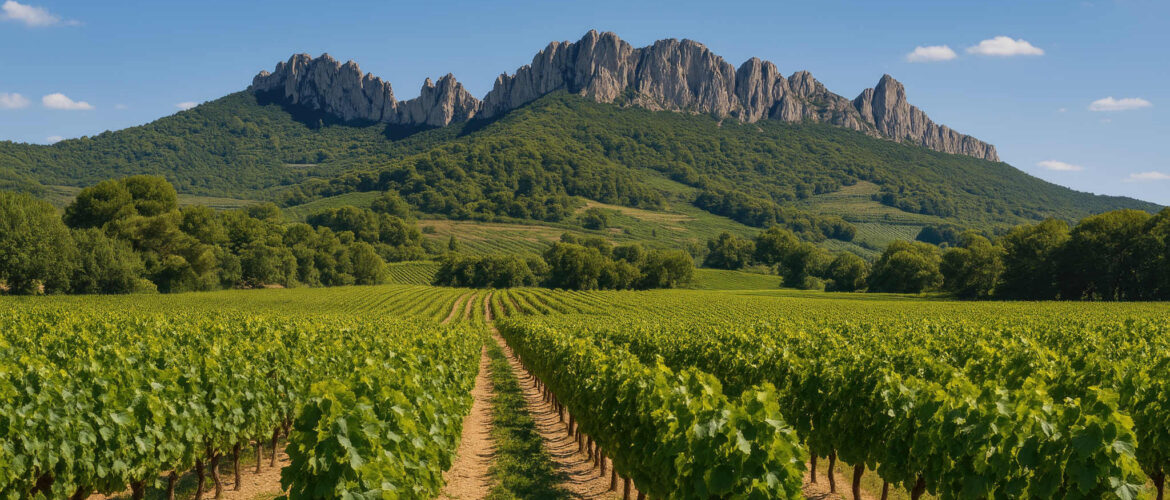
With its strikingly shaped limestone cliffs, vineyard-lined trails and breathtaking views of Mont Ventoux, the Dentelles de Montmirail is one of the most beautiful landscapes in the Vaucluse. This unique mountain range, easily recognised by its jagged rocky ridges carved like lace (“dentelle” in French), is a fantastic playground for nature lovers, hikers and rock climbing enthusiasts.
Whether you are looking for a gentle walk to soak up the Provençal scenery or a more challenging outing on the limestone walls, a day out in the Dentelles de Montmirail offers countless ways to discover the region from a different angle. But which trails should you choose? Where can you go climbing? And how should you plan your visit?
Join us as we explore this remarkable natural site, with our favourite walks and hikes, practical tips and a few personal recommendations to make the most of your getaway in the heart of Provence.
The Dentelles de Montmirail: a spectacular landscape in the heart of the Vaucluse
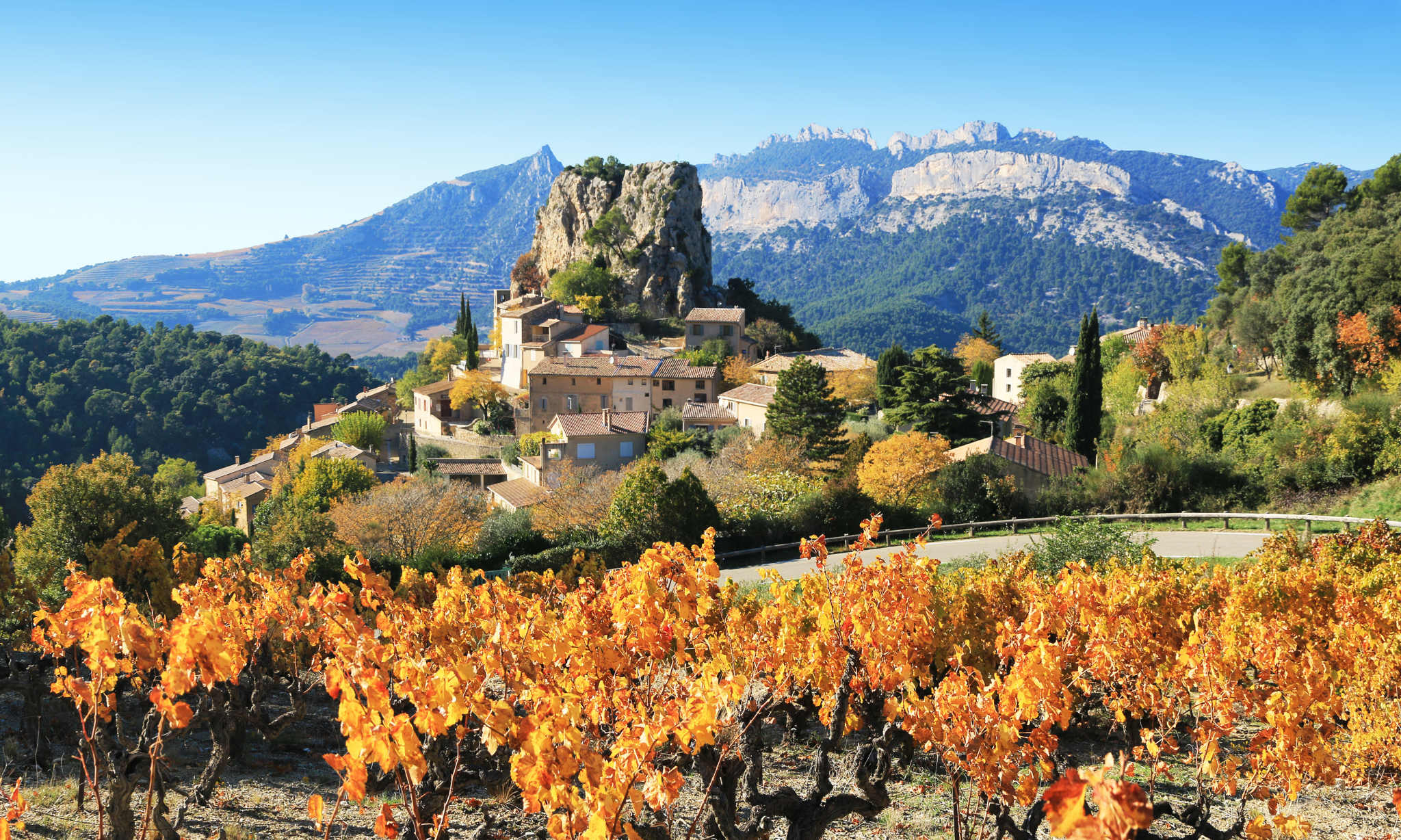
Located in the Vaucluse department, in the heart of Provence, the Dentelles de Montmirail form a small mountain range with a particularly distinctive skyline. Between Beaumes-de-Venise, Gigondas, Lafare and Suzette, these limestone ridges rise above the vineyards and rolling Provençal hills, offering visitors spectacular scenery.
The Dentelles de Montmirail reach a height of around 730 metres and are a prime destination for lovers of hiking, climbing and wide-open spaces. On clear days, the trails reveal superb panoramic views of Mont Ventoux, the Comtat Venaissin plain and the surrounding villages. The colours change with the seasons: soft greens in spring, golden light in summer and fiery shades in autumn.
A mountain range among vineyards, villages and peaks
The Dentelles de Montmirail are set in a quintessentially Provençal landscape, where rocky outcrops sit alongside the renowned vineyards of the Gigondas, Vacqueyras and Beaumes-de-Venise appellations. The narrow roads winding through the massif lead to charming villages, wine estates and many trailheads from which to explore the countryside on foot.
It is precisely this variety that makes a holiday in the Dentelles de Montmirail so appealing: you can spend the morning hiking among pines and holm oaks, try rock climbing on the limestone cliffs, then end the day with a stroll through a Provençal village or a wine tasting at a local winery.
Fascinating geology behind the famous rocky “lace”
The massif takes its name from its narrow, jagged ridges, which seem to be cut out against the sky. These spectacular formations are made of ancient limestone, folded and tilted upright by the tectonic movements that shaped the region, notably during the formation of the Alps and their foothills.
Over time, erosion has sharpened the shapes of these rocks, creating knife-edge ridges and sheer walls that have made the site famous. This unique terrain also explains why the Dentelles de Montmirail are so popular with climbers: the cliffs offer a wide range of climbing routes in an outstanding natural setting.
Whether you are a seasoned athlete or simply love beautiful scenery, this mountain range well deserves a place on your Vaucluse itinerary.
Hiking and walks in the Dentelles de Montmirail
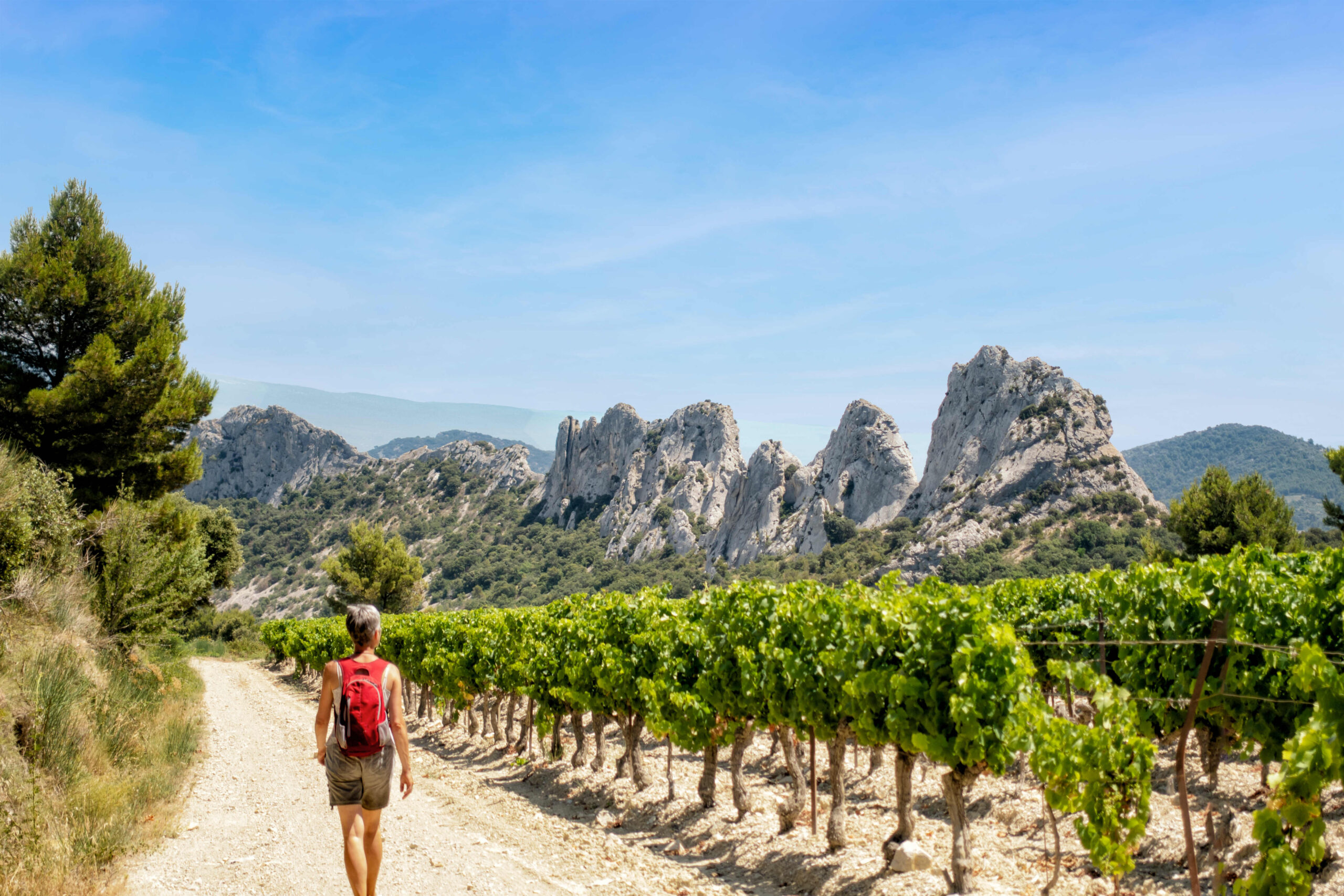
Hiking in the Dentelles de Montmirail is one of the best ways to discover the landscapes of the Vaucluse. The massif offers a wide variety of trails, through woodland, along rocky paths, past vineyards and over panoramic ridges. Whether you prefer easy walks or are an experienced hiker used to steep terrain, you will find routes to suit you. Be aware, however, that some sections are steep and stony, and the trails leading up to the ridges require sure footing.
The best hikes to discover the massif
The loop from Gigondas to the Rocher du Midi
This is an excellent choice for a first visit to the Dentelles de Montmirail. From the village of Gigondas, a loop trail takes you up to the Rocher du Midi, a viewpoint offering remarkable views of the limestone ridges, the vineyards and Mont Ventoux. One variant suggested by Decathlon Outdoor is around 5.4 km long, with 280 m of elevation gain and an estimated walking time of 2 hrs 20 mins.
Source: https://www.decathlon-outdoor.com/fr-fr/explore/france/les-dentelles-a-gigondas-654ffc80463a6
The biodiversity trail in Gigondas
To see the massif’s landscapes from a different perspective, the biodiversity trail at the Domaine de Longue Toque winds through the vineyards of the Gigondas appellation for around 6.7 km. This walk showcases the diversity of landscapes and natural habitats, with lovely views of the Dentelles.
Trails from Beaumes-de-Venise or Lafare
The Beaumes-de-Venise and Lafare area is another great gateway for exploring the massif. The paths alternate between vineyards, Mediterranean vegetation and rocky outcrops. Depending on the route you choose, you can opt for a relatively short walk or a longer hike to enjoy the scenery and the many viewpoints.
Before setting off, check the distance, elevation gain and waymarking of your chosen route: walking times can vary considerably from one variant to another.
Source: https://www.visorando.com/randonnee-dentelles-de-montmirail.html
Viewpoints not to be missed
Some viewpoints alone are worth planning a trip to the Dentelles de Montmirail:
- The Rocher du Midi: a must-see viewpoint, reached via the trails around Gigondas, with a beautiful view over the massif and Mont Ventoux.
- The Dentelles Sarrasines: their spectacular limestone pinnacles form one of the most iconic landscapes of the massif.
- The paths above the vineyards: they offer lovely views of the rows of vines, the Provençal villages and the surrounding hills.
To make the most of the views, choose a clear day and set off early, especially during hot spells. Keep in mind that sections at the foot of the cliffs and on rocky trails call for caution.
As routes and access conditions may change, check tourist information and maps before you go. You can plan your outing using the official Dentelles de Montmirail page on the Provence-Alpes-Côte d’Azur Tourism website, the hiking routes suggested by the French Hiking Federation (FFRandonnée) or the Visorando website.
Rock climbing in the Dentelles de Montmirail: a must-visit crag
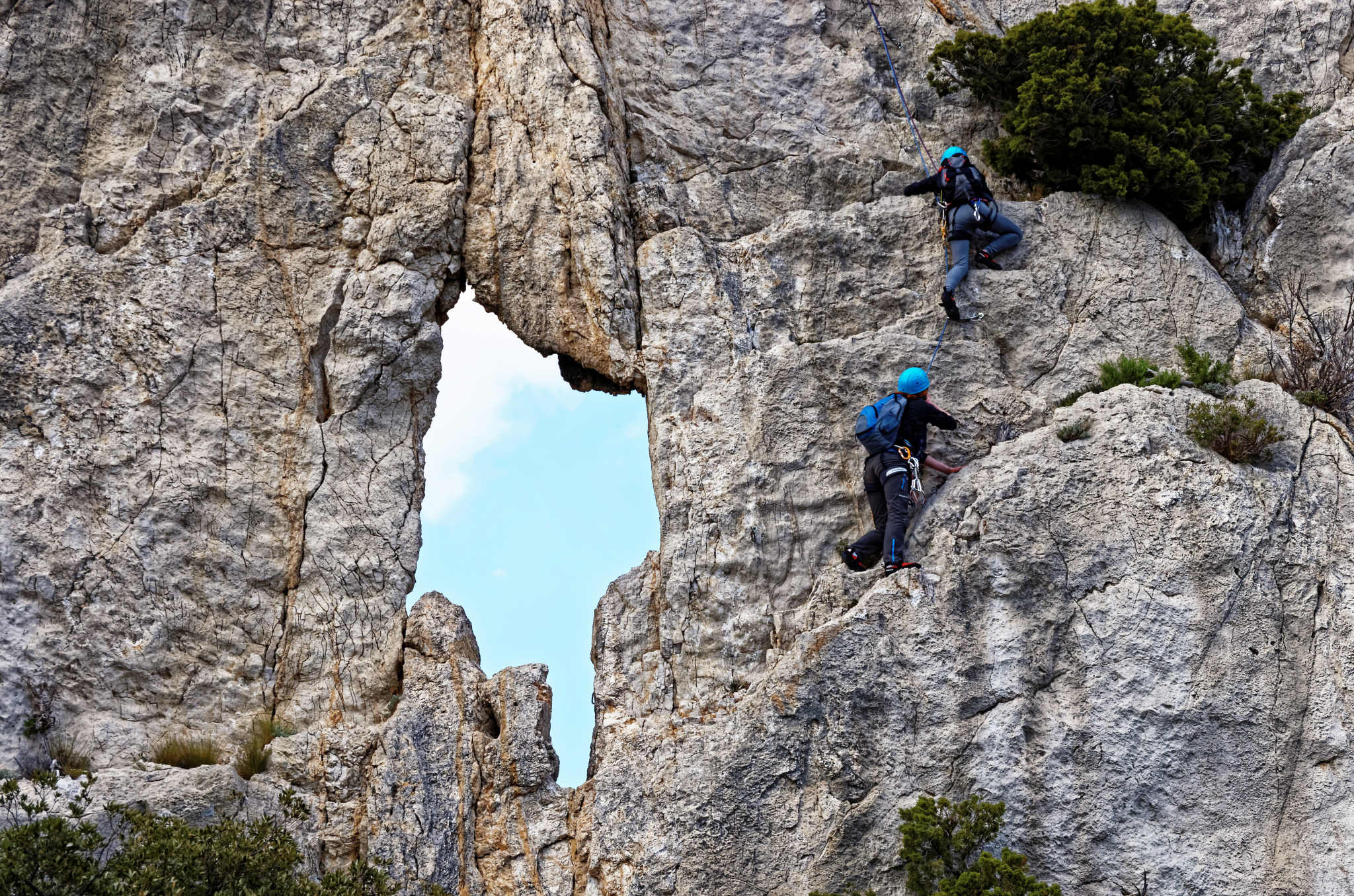
With their long limestone ridges, slabs and vertical walls, the Dentelles de Montmirail are a renowned destination for rock climbing in Provence. The massif offers routes of all grades in an outstanding natural setting, with sweeping views over the vineyards and hills of the Vaucluse. Climbing in the Dentelles de Montmirail does, however, suit climbers of different abilities depending on the sector: some cliffs are reserved for experienced climbers, while others offer easier routes for those wanting to try the sport.
The main crags and climbing routes
Several sectors let you discover the different sides of the massif:
- The Grand Travers chain, in Gigondas: the Rocher École offers beginner-level routes, graded from 3b to 6b+. It is worth exploring for climbers looking for a less demanding sector than the massif’s big faces.
- The Gigondas chain, north face: this historic sector features walls and slabs on demanding rock, with routes ranging from easy to very hard. The FFME (French Mountaineering and Climbing Federation) classifies it as a site for experienced climbers.
- The Clapis chain, north face: this limestone cliff offers routes of varying grades. Its aspect can be useful when looking for different conditions from those on the sun-exposed faces.
- The Rocher de Saint-Christophe, near Lafare: located on private land, this site offers routes of varying difficulty and a relatively short approach from the authorised path. It is essential to respect the access conditions set out by the FFME.
What level do you need to climb in the Dentelles de Montmirail?
There are routes of many different grades, but the presence of a few easy routes does not mean that every sector is suitable for beginners. Before choosing a crag, check the route grades, their height, the bolting and the approach walk. If you are new to climbing, the safest option is to hire a qualified instructor or contact a local climbing club rather than heading out to a cliff on your own.
To plan your climbing day, here are some reliable resources:
- The FFME’s official database of natural climbing sites: topos, grades, access and restrictions.
- The FFME page for the Rocher École, Gigondas: information on the beginners’ sector.
- The FFME page for the Gigondas chain, north face: characteristics and access conditions.
- The FFME page for the Clapis, north face: aspect, route heights and regulations.
- The FFME page for the Rocher de Saint-Christophe: access and site information.
Safety and good practice in the outdoors
Access conditions and restrictions may change, particularly to protect birds nesting on the cliffs. Some sectors are subject to seasonal closures: the FFME reports, for example, restrictions on part of the Dent Sarrazine and the Grand Montmirail during the nesting season. Always check the latest information pages and on-site signs before each outing.
Also remember to check the wildfire risk and any closures of the massif, especially in summer. Bring plenty of water, gear suited to your chosen route and a partner who is competent at belaying. The setting is magnificent, but safety always comes first when climbing.
Our personal tips for planning your trip to the Dentelles de Montmirail

Whether you are planning a short family walk, a challenging hike or a day of climbing, a little preparation will help you make the most of the Dentelles de Montmirail. The terrain can be steep, the trails stony and the Provençal sun particularly intense in summer. Here are a few tips to help you plan your outing in the best possible conditions.
When is the best time to hike or climb in the Dentelles de Montmirail?
Spring and autumn are generally the most pleasant seasons to explore the massif on foot. Temperatures are usually milder and the landscapes display beautiful colours, from Mediterranean vegetation to vineyards. In spring, nature comes back to life; in autumn, the vines turn golden and red.
In summer, set off early in the morning to avoid the hottest hours. Sun-exposed sections can become gruelling, especially on the rocky ridges. For climbing, choosing the right sector and aspect also matters: a shaded cliff can offer better conditions depending on the time of day and temperature.
Winter is also a good time to discover the Dentelles when the weather is fine. However, the mistral wind can blow very hard, making the ridges uncomfortable or even dangerous. Before you go, check the weather forecast and any restrictions on access to the massif.
Equipment, access and parking
For hiking, bring good walking shoes with grippy soles, plenty of water, a hat and sun protection. Even for a walk of just a few kilometres, take a map or a route downloaded to your phone: mobile coverage is not guaranteed everywhere and some trails are stony or steep.
For climbing, your gear must be suited to the routes you have chosen and in good condition. Check the site information before setting off, in particular access conditions, route bolting and any restrictions. If you lack the necessary experience, opt for a guided session with a professional.
Several villages provide access to the massif’s trails, including Gigondas, Lafare and Beaumes-de-Venise. Parking depends on your chosen route: look for the recommended car park on the route description and avoid parking on verges or in front of property entrances.
In summer, it is essential to check the access conditions for forested areas due to the risk of wildfires. Restrictions may be imposed depending on the weather and fire danger level.
One last tip: always adapt your route to your fitness level, the weather and the time you have. In the Dentelles de Montmirail, it is better to plan a slightly shorter walk and take time to enjoy the scenery than to try to reach every summit.
The Dentelles de Montmirail from our holiday rental

Located in Entraigues-sur-la-Sorgue, our holiday home with a pool in the Vaucluse is an ideal base for exploring the landscapes of Provence. The Dentelles de Montmirail are close by: it is around 20 km, or a 25-minute drive, to Beaumes-de-Venise, one of the villages from which you can set off to explore the massif.
You can spend a morning hiking the trails of the Dentelles, plan a day of rock climbing or simply enjoy the views over the vineyards and Mont Ventoux. After a busy day, you will love coming back to the peace and quiet of our property, with its 6,000 m² wooded grounds and 13-metre heated swimming pool, perfect for relaxing on sunny days.
Our holiday rental also lets you mix and match activities during your stay. You can combine outdoor trips to the Dentelles de Montmirail with visits to Provençal villages, sightseeing in Avignon and the many other things to do in the Vaucluse.
Whether you are travelling as a couple, with family or with friends, you will enjoy a stay that combines hiking, outdoor activities and relaxation in a green, leafy setting.
Want to discover Provence at your own pace? Find all the details about our holiday rental at the Moulin de Souchières in Entraigues-sur-la-Sorgue and start planning your next stay in the heart of the Vaucluse.
Useful information on the Dentelles de Montmirail
Here are some reliable resources to help you plan your trip:
- Provence Guide – Vaucluse Tourism: hiking ideas, practical guides and tourist information about the department.
- Chemins des Parcs: hiking routes in the regional nature parks of Provence-Alpes-Côte d’Azur, with details on distances, elevation gain and difficulty.
- FFRandonnée – Tour des Dentelles de Montmirail: an overview of a multi-day trail to discover the massif and its villages.
- FFRandonnée – Topoguide “Autour du Mont-Ventoux et des Dentelles de Montmirail”: a useful guidebook for planning multi-day hikes.
- Vaucluse Prefecture: official information on access restrictions to the massifs and wildfire risks.
Map :